




In every SAP transformation project, there comes a moment when the release schedule tightens, the business starts asking for faster changes, and the testing team finds itself in a familiar crossfire. IT wants velocity. Business wants stability. Leadership wants proof that the investment in SAP modernization will pay back quickly. Somewhere in the middle, the QA lead must answer a deceptively simple question: What is the most cost-effective way to automate SAP testing for Agile teams?
This is where the debate between no-code and scripted SAP testing begins. And like most debates in enterprise technology, the answer is not just technical. It is economic. It is organizational. It is about people, process, and return on investment.
To understand the ROI story clearly, let us walk through the journey of a typical Agile SAP team.
When speed clashes with complexity
Picture an SAP team delivering biweekly sprints on a global S/4HANA program. Finance wants to change posting logic. Logistics wants to tweak ATP rules. A custom IDoc mapping needs refinement. Every change triggers a ripple effect through SAP. The QA team, already playing catch-up, relies heavily on manual regression cycles that stretch across weeks.
Leadership calls for automation. The engineering team suggests Selenium, ABAPUnit, and a homegrown scripted framework. The business counters with a push toward a no-code approach that enables non-technical testers to automate parts of the process.
Two roads emerge, both promising coverage and speed. But only one will maximize ROI in this environment of continuous change.
The economics of scripted SAP testing
Scripted SAP testing has a long pedigree. It is powerful, flexible, and deeply technical. Automation engineers can craft complex logic, validate multi-step workflows, and handle advanced integrations. In theory, scripted testing scales elegantly.
In practice, Agile SAP programs experience a different reality. Scripted automation offers high precision but also high maintenance. Every SAP UI change, every Fiori update, every enhancement to a custom module introduces fragility into test scripts.
Costs creep in quietly.
Scripted automation requires:
-
Skilled engineers who understand automation frameworks
-
Longer ramp-up time to build and stabilize scripts
-
Continuous refactoring as SAP screens, data, and workflows evolve
-
Expensive maintenance cycles that grow with regression coverage
For teams with deep automation skillsets and complex scenarios, the approach delivers value. But for Agile teams running frequent changes, the economics can become heavy.
The rise of no-code SAP testing
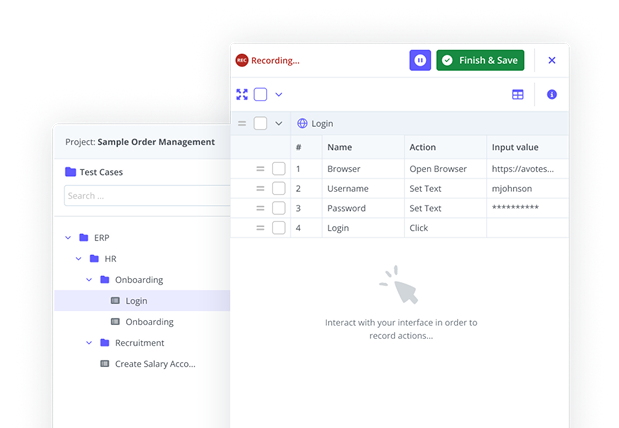
No-code automation introduces a different philosophy. Instead of building scripts, testers compose workflows visually. Business users participate directly. Automation becomes a shared responsibility instead of an engineering bottleneck.
Adoption numbers reflect this shift. Global reports for 2025 indicate widespread acceleration toward no-code and scriptless testing because it democratizes automation and reduces operational maintenance. Enterprises cite faster test creation and lower ongoing effort as their primary drivers.
And it shows up in the ROI math.
No-code tools offer:
-
Minimal onboarding time
-
Faster automation of business-centric SAP processes
-
Lower maintenance due to self-healing controls
-
Broader tester participation
-
Predictable implementation timelines
In an Agile environment where regression packs grow rapidly, the ability to build and maintain tests without deep code expertise changes the financial equation dramatically.
Related Reading: SAP S/4HANA: Transforming Business Operations and the Crucial Role of Test Automation
A tale of two SAP ROIs
To make this real, consider the fictional but realistic SAP team at “NorthBridge Manufacturing”, an enterprise running S/4HANA across 14 countries. Like many organizations, their initial plan was to build a scripted automation framework. Three months in, they had automated fewer than 25 scenarios. Maintenance consumed half the automation engineer's time.
Leadership demanded a cost-benefit analysis. Below is a simplified version of the evaluation they conducted.
Three-year cost model
| Cost component | Manual (baseline) | Scripted automation | No-code automation |
|---|---|---|---|
| Initial setup | 0 | 200,000 | 100,000 |
| Annual maintenance | 500,000 | 150,000 | 50,000 |
| Three-year total | 1,500,000 | 650,000 | 250,000 |
| Savings vs manual | 0 | 850,000 | 1,250,000 |
ROI over three years
ROI = (Savings minus initial investment) / initial investment * 100
| Approach | ROI % | Payback period |
|---|---|---|
| Scripted | 325 percent | 7 months |
| No-code | 1150 percent | 2 to 3 months |
The conclusion surprised no one. Scripted automation delivered positive ROI but required a longer payback cycle and ongoing engineering-heavy upkeep. No-code delivered far stronger and faster economic returns, mainly due to dramatically lower maintenance burdens and rapid scenario coverage.
NorthBridge adopted a hybrid strategy. Business processes and repetitive workflows went into no-code automation. Complex, highly customized integrations remained scripted. It became the playbook that many modern SAP teams follow today.
Related Reading: Driving SAP Testing ROIs with Avo Assure
A deeper look at coverage, agility, and maintenance
SAP systems evolve fast. This is where the real ROI divergence happens.
Business-critical SAP flows, such as order-to-cash or procure-to-pay, often require broad cross-functional validation. These are ideal candidates for no-code automation because they involve business testers who deeply understand process nuances.
Scripted automation shines when:
-
Custom ABAP logic must be tested
-
Unique integrations require precise validation steps
-
Complex rule chains must be asserted at code level
But the majority of SAP regression testing does not exist here. It exists in repeatable, stable business workflows that are perfect for no-code platforms.
This is why Agile teams increasingly see no-code as an ROI multiplier rather than a cost-saving alternative.
KPIs that make ROI visible
Successful Agile teams evaluate testing investments not with gut feel but with data. Below is the KPI framework NorthBridge used and that many enterprises adopt today.
| KPI | measures | Why it matters |
|---|---|---|
| Automation coverage | Percentage of critical SAP flows automated | Direct indicator of regression cycle reduction |
| Time to create a test | Hours to build a new automated test | Faster creation equals faster agility |
| Maintenance effort | Monthly hours spent on refactoring | Lower maintenance equals higher ROI |
| Mean time to feedback | Time from code commit to test results | Determines release velocity |
| Defect escape rate | Production defects due to inadequate testing | Strong indicator of risk reduction |
| Cost per release | Overall testing cost per release cycle | Clear financial measurement |
In multiple assessments, no-code approaches consistently outperformed scripted ones in test creation speed and maintenance efficiency. Scripted frameworks still won on flexibility for advanced edge cases, but these represented a smaller slice of the total testing portfolio.
A realistic decision framework for Agile SAP teams
The right answer is neither no-code nor scripted in isolation. The right answer is alignment between approach and ROI drivers.
A strategic breakdown looks like this:
-
Use no-code for:
-
High-volume regression
-
Core business processes
-
Cross-functional workflows
-
Frequent UI-level validations
-
Distributed testing teams
-
-
Use scripted automation for:
-
Complex or highly customized scenarios
-
API-level validations
-
Low-level logic requiring code assertions
-
-
Use a hybrid model to:
-
Optimize cost
-
Reduce maintenance
-
Balance precision with speed
-
Accelerate Agile releases
-
Maintain control where needed
-
Agile teams that adopt this balanced approach typically see the strongest and most sustainable ROI.
The final verdict: ROI favors pragmatism, not ideology
In the debate between no-code and scripted SAP testing, the question is not which is better. The question is where each approach creates the highest economic return. When examined through the lens of Agile delivery and SAP’s inherent complexity, the pattern emerges clearly.
No-code testing maximizes ROI in:
-
High-frequency release environments
-
Cross-functional teams
-
Programs that demand predictable coverage growth
-
Organizations without deep automation engineering capacity
Scripted testing maximizes ROI in:
-
Highly customized, technical, integration-heavy areas
The strongest financial and operational gains come from knowing which part of your SAP landscape belongs to which category.
SAP testing is not merely a technical function. It is an economic strategy. And in the context of Agile delivery, no-code automation has proven to be the more powerful driver of return on investment.
.jpg?width=488&height=255&name=Ebook%201_1200x627%20%E2%80%93%205%20(1).jpg)
Avo Assure delivers up to 2× value over manual approaches, driving quantifiable gains in test coverage, faster test cycles, and higher release quality.
-
Coverage: broader, repeatable SAP test coverage that reduces missed regressions and increases confidence in releases.
-
Speed: measurable reductions in test cycle time and faster time‑to‑release.
-
Productivity: fewer manual steps, higher throughput for engineering and QA teams.
-
ROI: improved campaign and project economics through lower test costs and faster feature delivery.
Adopt this no‑code, AI‑agnostic platform to convert automation into clear, trackable business outcomes. Learn more at www.avoautomation.com or contact info@avoautomation.com. See How Church & Dwight Inc. simplified SAP

FAQs for No-Code vs Scripted SAP Testing: ROI for Agile Teams
References
1. Global App Testing - Key automation testing metrics and ROI formula.
2. IAEME / Research PDF. Comparison of script-based versus no-code automation with measured gains
3. BrowserStack - Automation testing trends and no-code benefits in 2025
4. SAP News and Innovation guides for SAP Business AI and platform evolution
5. No-Code Testing vs. Scripted Testing: Practical Examples and Complex Scenarios